🧭 Designing for Equity — Rulemaking from the Margins In
🎯 Core Message: To build resilient, inclusive systems, rulemaking must center those historically excluded—workers, communities of color, disabled people, and others pushed to the margins.

Equity is not a box to check; it is a design principle.
🧱 Key Points
• Legacy of Exclusion
Traditional rulemaking reflects dominant interests. Marginalized voices are underrepresented not by accident, but by design.
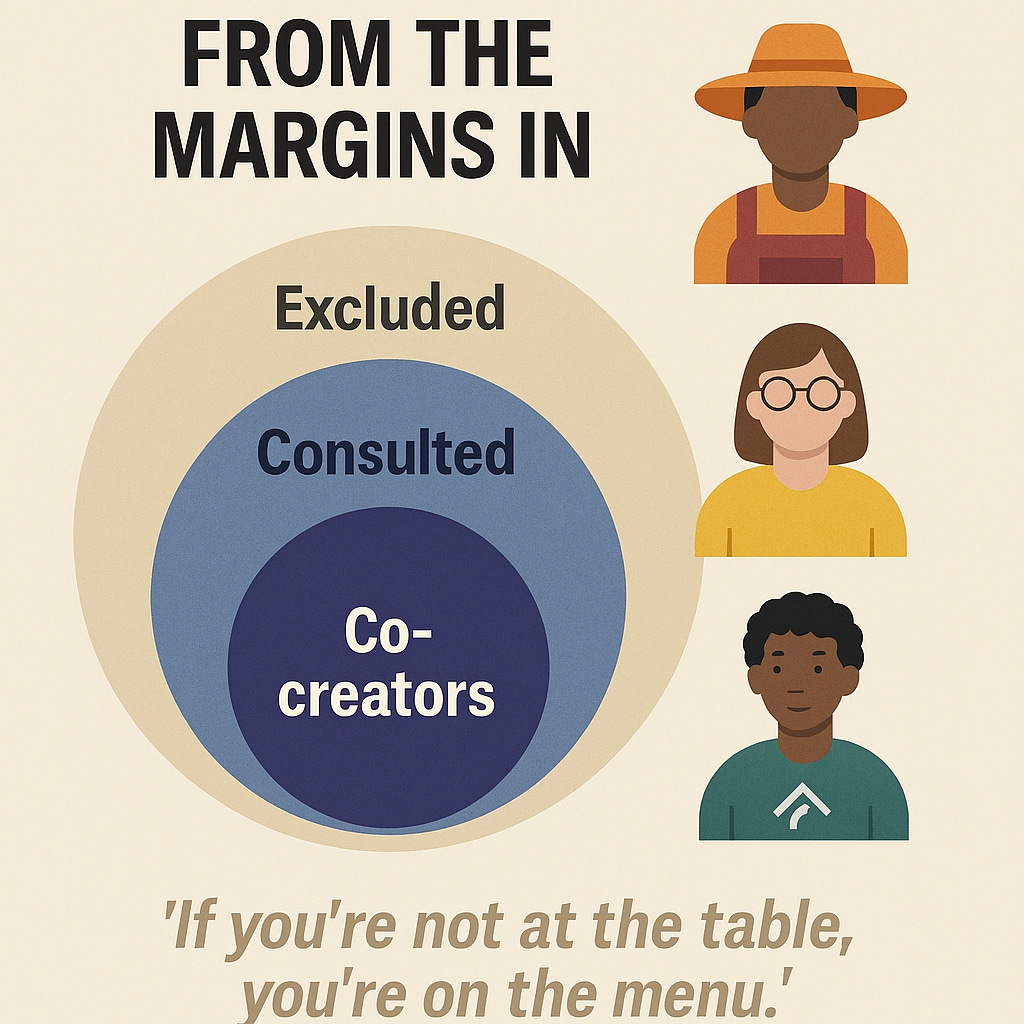
• Equity as a Design Principle
Inclusive governance means starting with those most affected, not adding them in later. It flips the usual top-down model.
• Participatory Tools That Work
• Community-led impact assessments
• Worker councils in regulatory review
• Accessible digital platforms for rule feedback
• Resilience Through Inclusion
Systems built from the margins are more adaptive and less prone to rollback. They reflect lived realities, not abstract ideals.
🧪 Case Study: Seattle’s Domestic Workers Standards Board
In 2018, Seattle launched the Domestic Workers Standards Board—a groundbreaking advisory body composed mainly of nannies, house cleaners, and home care workers, many of whom are immigrants and women of color.
Why It Matters:
Domestic workers have long been excluded from labor protections. The board gave them direct influence over rulemaking that shaped their working conditions.
Key Features:
• Majority worker representation
• Participatory listening sessions and peer input
• Co-developed policy recommendations
Outcomes:
New protections emerged: rest breaks, anti-retaliation measures, and portable benefits. Seattle’s model flipped the script—workers were not consulted after the fact; they co-created the rules from the start.
🔗 Call to Action
Audit your processes.
• Who is consulted?
• Who is empowered?
• Who is still waiting outside the door?
True equity means shifting power, not just sharing opinions.
This is such a strong reminder that equity isn’t about adding voices, it’s about shifting who holds the pen from the start. Seattle’s Domestic Workers Standards Board shows what’s possible when those most affected design the rules, not just react to them. Imagine how different our systems would look if “nothing about us without us” was the starting point, not the slogan.